











Low Energy Display Fridges: Which Glass Door Models Use the Least Power?
Makers' kWh per day figures for the display fridges in our range: what is typical for 1, 2 and 3 doors, which models use less than most, and why open fronts use the most.

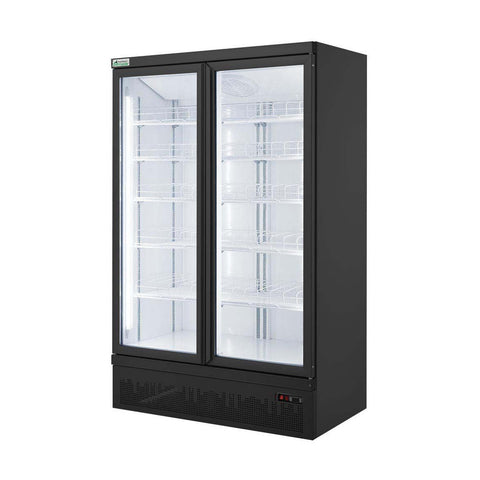
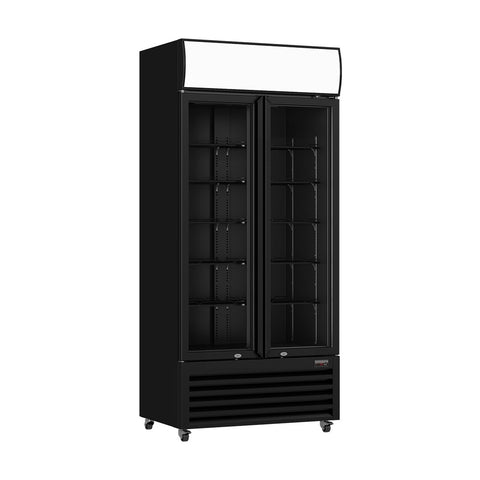
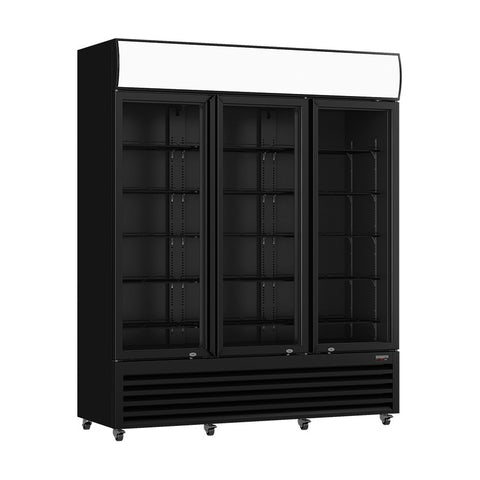
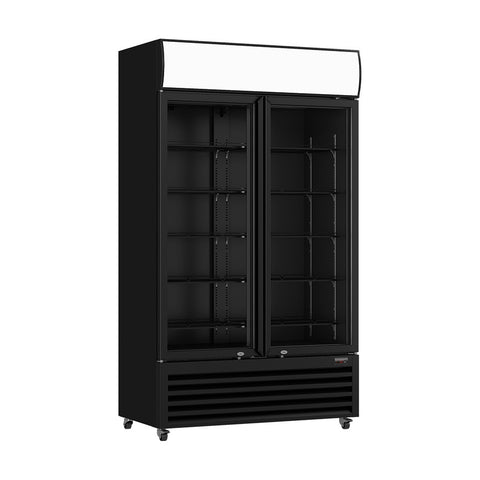
A low energy display fridge is one that uses fewer kilowatt hours a day than other display fridges of the same size, by the maker's own figure. In our range, a typical 1 door upright glass door fridge is listed at 1.98 kWh in 24 hours, a 2 door at 4.37 and a 3 door at 7.06. Some models are listed well under those: 1.273 kWh for a 345 litre 1 door, and 2.55 kWh for a 1,079 litre 2 door.
This guide shows which display fridges in our range use less power than most similar models, how to read a kWh figure, and what else decides the power bill.
How to read the energy figure
Makers state energy use as kWh per 24 hours (kWh/24h). It is the electricity the fridge uses in a day under the maker's test conditions. Multiply by 365 for a year: 1.273 kWh a day is about 465 kWh a year, and 4.37 kWh a day is about 1,595 kWh a year. Multiply that by your electricity rate to get the yearly running cost. Our running costs guide works through examples.
Two cautions. Only 530 of the cold products we sell state a kWh figure at all, so a fridge without one is not being compared here. And makers test at different room temperatures, so treat small differences as a tie.
What is typical for an upright glass door fridge?
These are the middle (median) figures for the upright glass door fridges in our range that state both litres and kWh, as at 6 November 2026.
| Doors | Models with a figure | Typical kWh/24h | Lowest | Highest |
|---|---|---|---|---|
| 1 door | 40 | 1.98 | 1.273 | 4.5 |
| 2 doors | 34 | 4.37 | 1.64 | 11.79 |
| 3 doors | 10 | 7.06 | 4.99 | 10.49 |
The spread is the point. Among 2 door models the highest figure is about seven times the lowest, so the choice of model matters far more than most buyers expect.
Glass door display fridges that use less power than most
Each model below uses less power per day than most similar-sized glass door fridges we sell. "Similar models" means the other upright glass door fridges within 30% of its litres.
| Model | Doors | Capacity | Maker's kWh/24h | Typical for similar models |
|---|---|---|---|---|
| SKOPE BME300N-A | 1 | 277 L | 1.49 | 1.865 (13 models) |
| True CVM-13-HC | 1 | 345 L | 1.273 | 1.98 (22 models) |
| True CVM-20-HC | 1 | 484 L | 1.484 | 2.283 (30 models) |
| SKOPE TME1000N-A | 2 | 980 L | 2.7 | 6.67 (36 models) |
| AG CU1000TNG | 2 | 1,000 L | 3.2 | 6.67 (36 models) |
| SKOPE BME1200N-A | 2 | 1,079 L | 2.55 | 5.145 (40 models) |
Browse all upright glass door fridges or the wider glass door fridges range, and check the energy line in each product's specifications.
Low energy food and cake displays
Food displays are generally listed at higher figures than upright fridges of the same litres, and the gap between models is wide. The SKOPE FDR.900 refrigerated food display (358 litres) is listed at 3.45 kWh in 24 hours, where the typical figure for the 9 similar displays we sell is 9.4. The SKOPE FDR.1200 (482 litres) is listed at 3.9 kWh, against a typical 11.2 across 19 similar displays. See cake display fridges for the range.
Open deck fridges use the most
An open deck fridge has no doors, so it is cooling the shop as well as the product. The SKOPE OD460N open deck fridge is listed at 7.50 kWh in 24 hours and has a night blind to save energy when the fridge is not in use. At the far end, the True TOAM-48GS-HC open air merchandiser, 1,220 mm wide, is listed at 29.5 kWh in 24 hours.
A multideck with doors uses much less. The Bromic FHM1000HD-NR, a full height multideck with doors holding 611 litres, is listed at 3.18 kWh in 24 hours. If low running cost is the goal, choose doors. See open deck fridges for both kinds.
Glass costs power too
A display fridge will always use more than a solid door fridge of the same size, because glass insulates less well than an insulated steel door. In the five matched pairs in our glass door vs solid door guide, the glass door model used between 20% and 61% more energy a day than its solid door twin. So use glass where the fridge has to sell, and solid doors for storage out the back.
What else lowers the power bill?
- The right size. A half-empty 2 door fridge costs more to run than a full 1 door. Buy the litres you will fill.
- A cool, ventilated spot. Keep the fridge out of direct sun and away from heat, with air space around the condenser.
- A rating that suits your room. The AG CU1000TNG is tested at an ambient temperature of 43°C and the SKOPE BME300N-A at 40°C. A fridge working inside its rating does not have to run flat out.
- Clean seals and a clean condenser. A door seal that leaks, or a condenser clogged with dust, makes any fridge use more.
- Night blinds on open fridges. Pull them down at closing time.
- Small counter units. If you only need a few dozen drinks cold, a countertop display fridge is a smaller box to keep cold.
Frequently asked questions
What is a low energy display fridge? A display fridge whose maker lists a lower kWh per 24 hours figure than most display fridges of the same size. In our range a typical 1 door upright glass door fridge is listed at 1.98 kWh in 24 hours, and the lowest at 1.273.
How much electricity does a display fridge use? By makers' figures in our range: typically 1.98 kWh a day for a 1 door upright glass door fridge, 4.37 for a 2 door and 7.06 for a 3 door. Individual models range from 1.273 to 11.79.
Which uses less power, an open display fridge or one with doors? One with doors. The Bromic FHM1000HD-NR multideck with doors is listed at 3.18 kWh in 24 hours; the SKOPE OD460N open deck fridge is listed at 7.50.
Do display fridges have energy star ratings? We compare models by the kWh per 24 hours figure each maker publishes, because that is the number that decides the power bill. Not every model states one.
Does a bigger display fridge always use more power? No. The 1,079 litre SKOPE BME1200N-A is listed at 2.55 kWh in 24 hours, less than many fridges half its size. Compare the kWh figure, not the litres.
Sources: each model's kWh per 24 hours figure as listed by its maker on our product pages; typical figures calculated from the models in our range on 6 November 2026.
Need a hand choosing?
Ask our AI assistant
It answers questions about sizes, power, temperatures and delivery. It's an AI, so it's the quickest place to start.


